
Wugulun Shaolin Kung Fu Academy
Showing 1 to 8 of 8 (1 Pages)
Wugulun Shaolin Kung Fu Academy
|
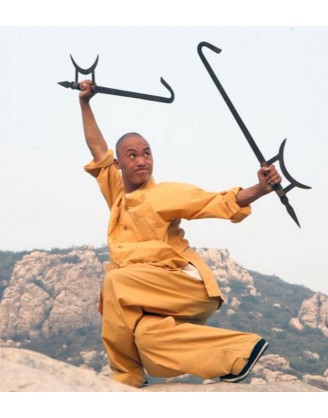
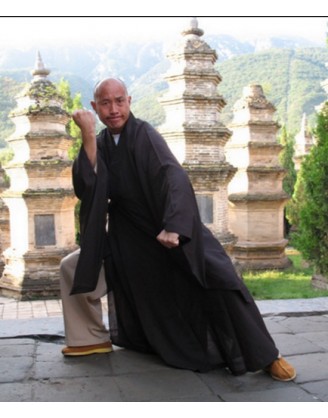
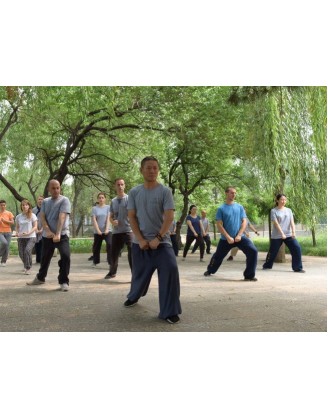
Shaolin Wugulun Kung fu is a little known yet significant form of kung fu now overshadowed by the more popular sports-and-performance oriented Shaolin wushu. Recently, however, there has been a rekindling of interest in this original kung fu form and a slowly growing group of Chinese and Western students have come to the Wugulun Kung fu Academy to learn these ancient skills.
Shaolin Wugulun Kung fu is based on the holistic philosophy of living, ChanWuYi. It is a practice focussed on the development of optimum health and fitness through the use of appropriate movements, breath control and healing arts — and the creation of an internal state of meditation and a compassionate heart. It is also an effective and highly skilled combat art.
Wugulun Kung fu is significant for all those who are interested in kung fu as it is the origin of the modern better-known wushu. The forms, developed hundreds of years ago, are slow, graceful, incredibly intricate and meditative -- yet deadly when used in fighting.
A story told about Master Wu Nanfang illustrates the essence of Wugulun Kung fu.
When working in Kaifeng the Master trained every day after work in a secluded place in a quiet park. A man who practiced wushu started to come with his friends to jeer at Master, mocking the slow, seemingly gentle forms and insulting the Master, saying that what he was doing was useless and not real kung fu. When the Master ignored him, the man got more and more angry and finally one day he suddenly attacked. Master Wu Nanfang reacted with lightning speed and immobilized the man with a neck hold. He told the man that a just a fraction more pressure would result in a broken neck. The slow, almost meditative, movements of Wugulun Kung fu aim to develop and store qi energy and at the same time create such a state of alertness and awareness that the individual can respond with lightning speed and total power to any situation.
Tuition Because western students have a limited time in which to study, there are no set times for courses. Tuition is on an individual basis and students can arrange their study schedules to suit the times available to them. For your information, however, the school will be closed for the winter and Chinese New Year break from mid-December to 20th February 2014.
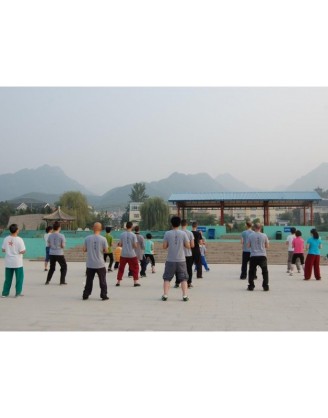
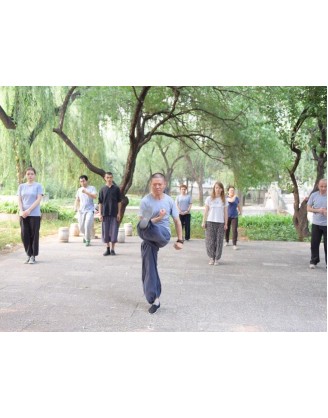
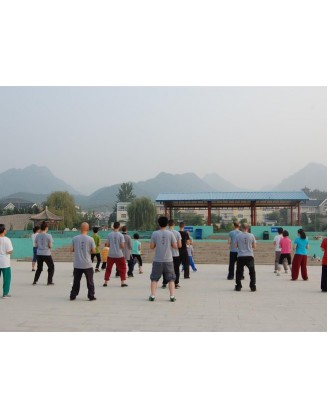
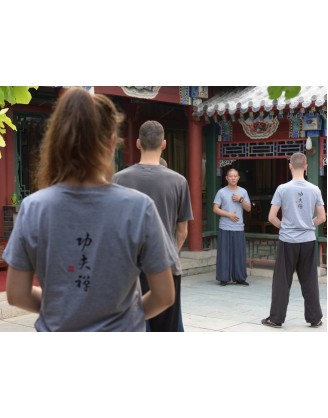
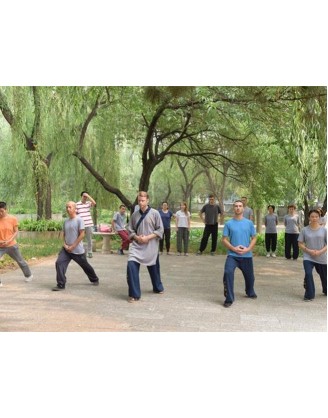
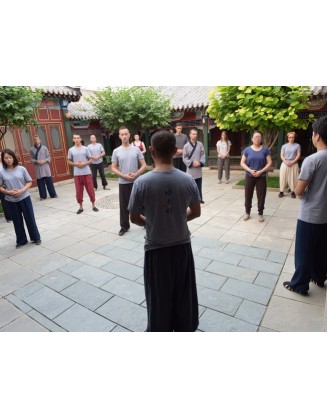
As the Academy is a small school, tuition is individual. You are taught according to your own level of skill and you train at your own pace. Training is focussed but relaxed and there are frequent rest periods. Students used to ‘wushu’ styles of training will need to make some adjustments; for example, running is not part of the Wugulun training. The emphasis is on correct breathing and strengthening qi energy in the ‘dentian’.
The Dengfeng area has an extreme climate: very cold in winter and very hot in summer, especially in July and August -- which is, however, when western students find it most convenient to travel to China. Bring only light clothes.
Board and Accommodation The Academy provides three home-cooked vegetarian meals a day prepared according to the ChanWuYi system which does not include hot spicy foods, garlic or onions. The food is sometimes bland but at all times healthy, allowing the body to optimise its resources for efficient training.
Accommodation is dormitory-style and is clean and comfortable with airconditioning for very hot days and heating for extreme winter conditions.
Training Schedules
Students attend all training sessions from Monday to Friday. Saturday is a day off although there is a early morning training session. Sunday morning is also free after the early morning training session. Training starts in the afternoon at 2.30.
Meditation
Meditation is an important part of Wugulun kung fu training.The new school now has a meditation room where students can go and meditate quietly whenever they feel like it. Group meditations happen as well.
Daily Schedule
5.30 - 6.30 training (in summer this session will start at 4.30 am due to increasing temperatures. The training area is outside)
7.00 – 8.00 breakfast
8.30 – 11.30 training
12.00 – 2.30 lunch and rest
2.30 – 5.30 training
6.00 – dinner
Students should be quietly in their rooms by 9.00 pm
Origins of some of the Techniques
Master Wu Nanfang is keen for students to explore some of the origins of kung fu. In the old days people did not have so much time to practise their kung fu training because they were busy working in the fields. They therefore incorporated their practices into their farming movements such as drawing water from wells, grinding grains into flour or hoeing the fields. The Master is unique in teaching these origins and has included the old well from the original old farm and a grinding mill in the grounds of the school for students to practise on.
Can I study with Master Dejian?
Kungfu students probably ask this question because they have seen YouTube videos of Master Dejian teaching both western and Chinese
students. These videos were made perhaps 10 or 12 years ago before Master Dejian took on the huge projects of building the San Huang
Zhai Temple and monastery on Song Mountain. And now that the project is nearly complete he is very busy with the many duties of the monk
of this temple. He is also involved with a lot of healing projects. He now has only a few students who have been with him for many years and
does not take new students. Master Dejian and Master Wu Nanfang are kungfu brothers and work together in many ways to preserve and
promote Wugulun or ChanWuYi kungfu. Attending Master Wu Nanfang’s academy is the best way to get a taste of this form of kungfu.
About your training
It is requested that you trust the Masters experience and understanding of Kung fu training. Many foreigners come to the Academy and don’t follow the Master’s instructions. They start training differently because they think their own way is better. In the beginning many people have difficulty with the slow movements and the basic (sometimes not very exciting) training. Please be patient but persevering and accept that real Kung fu skills take a long time to develop.
Local Sightseeing Information
Going to the Shaolin temple and San Huang Zhai – on your own
Because of the number of tourists on a weekend it is best to go on a weekday if you can. If not, it is good to go early before the tourist crowds get there! The ticket office opens at 7am. Avoid going to the ST on the national holiday from1st to 6th October as half of China is also trying to get there!
Inside the Shaolin Temple
The entrance fee is 100 yuan. You buy your ticket at the ticket office on the left side when you arrive. It is signposted. Follow the crowd.
Once inside you follow the road in front of you for about 1 mile until you reach the temple. On the right you will pass all kinds of buildings. These include the old Tagore building, the original kungfu university, other kungfu schools, accommodation for all the students (not visitors – see later), and a large hall where performances are given by top kungfu students. Usually the times of the performances are shown on a sign outside. You might want to go to one of these performances as many of the top students show off their skills here. (like popping a balloon with a needle through a plate of glass!!!)
(There seems to be many toilets around and most of them are reasonably clean – for China)
As you come to the ST group of buildings you will see a bronze statue in an entrance way on the right. This is Budai (Hotei in Japanese, Maitreya in Hindi), the laughing Buddha, who loved children and always carried sweets and presents for him in his sack. This is why the statue is crawling with children!
Next you will come to the main Temple which you will recognise from countless photos. You need to show your entrance ticket again here. Once you are inside you will see the trees studded with holes. These were made by the fingers of past kungfu fighters showing their strength.
I won’t go into details about the temple, but there are 7 halls and it is in the 6th one, I think, that you can see the floor with the old bricks worn by the feet of countless fighters.. The hall with the walls covered in paintings of the kungfu fighters – of which Master Wu Gulun fighting with his uncle – is in one of the side halls on the right.
Also in another side hall on the right you will see an almost empty room with a glass case in which there is a big rock. This is supposedly a rock from the cave in which Bodhidharma (Chinese – Damo) sat for 9 years and has his shadow imprinted on it!
Damo’s Cave and the Chuzu Temple
When you are finished in the ST itself, exit and turn to your right. Very soon you will see a sign pointing to the Damo’s cave on Wuru Peak and the Chuzu temple. The new path to the cave by-passes the Chuzu temple but it is worth a visit (take the left path) as it is quite a silent oasis in the tourist chaos. Go around the right of the temple to rejoin the path to the cave. Damo’s cave is also quite silent as most people don’t want to make the walk up there. It is quite steep and strenuous. But the view from up there is amazing and it is wonderful to meditate in the cave for awhile. This is where Zen started!
The climb up and down will take about an hour and a half.
The Pagoda Forest
When you return, turn right again and you will soon come to the famous Pagoda Forest, showing the tombs of past Abbots and other holy men connected with the ST.
Huike’s House
Continue walking and you will come to a big kind of ‘crossroad’ with a bewildering number of signs. Three things are happening here: 1) there is a ‘small’ cable car system (costs about 50 yuan. Keep your ticket safe as you will need to show it on the way down)) which takes you up to the site of Huike’s little house. Huike was the Damo’s most famous disciple – the one who supposedly cut off his arm to show how intent he was on becoming Damo’s disciple. When I was there last year the ST was doing one of their awful ‘restorations’ which spoilt the place for me. But maybe they have made it nicer now that they are finished.
You can continue walking and climb high onto a peak further on – follow the noisy crowd. The views from there and from the cable car are amazing. You can see the whole Song Shan range and realise how big it is.
Up the mountain to start the walk to SanHuangZhai
2) On the right of the ‘crossroad’ there is a sign directing you to the base of the mountain. This is quite a steep trek if you decide to go this way but it saves you the cost of the cable car which is 60 to 80 yuan (cant exactly remember). This path will bring you to a flat area on the top of the mountain where the cable car ends and the mountain walk begins.
If you choose to take the cable car (stunning views), take the middle path to the cable car station (3). The cable car will take you to the top of the mountain without sweating!!! Remember to keep your ticket if you are coming back that way.
The Mountain Walk and SanHuangZhai
This is an amazing walk which is a once in a lifetime experience! And your legs will know it! You will walk up and down, round and about, and eventually you will reach the famous suspension bridge. Vertigo sufferers will be in trouble. From most places on the walk you can see SHZ ahead of you.
There are little café’s with some ‘street food’ along the way. You can also find lots of vendors along the roads in the Shaolin Temple (eg where the road to Damo’s cave starts)
It is still quite a climb from the suspension bridge but eventually you will reach the temple complex. Bear in mind the fact that work only began on this project in about 2004. it is an amzing construction feet. On the left, closed to the public, is the area where Shi Dejian lives with his small group of students. On the right is the public area – if it is open that day. Here you can visit the temple to pay your respects and enjoy a stunning view from various platforms.
If you have decided to leave via the ‘back’ path you will go through the temple complex and take the very steep path down to the base of the mountain. The path ends with the famous stone staircase which your legs will tell you all about!
All the building materials (except the actual stone) and all the supplies for a huge labour force were carried up this path.
Getting back to the School
At the end of the staircase you exit the walk and there is no public transport available for the approximately 8 miles back to Shilipu. But usually there is a public or private taxi which had brought people to start the walk from this end and they will be eager to take you back to Shilipu for 20 or 30 yuan. Decide on the price before you leave and preferably have the exact money with you.
Coming back you will hopefully recognise the big crossing with traffic lights where you driver will turn right towards Dengfeng. Shilipu is about a mile from the crossing so keep a sharp look out for the bus station on the left. Another landmark is ‘the rock shop’ on the left – a line of huge rocks which are for sale for people wanting a decorative feature for their buildings.
Staying overnight at the ST
As there is so much to see and experience here you might want to stay overnight inside the compound. There is a very nice youth hostel called ‘Kungfu Hostel’ in the so-called Shaolin village up one of the side roads the entrance of which you can find almost directly opposite the ST across the small river. The road runs up the side of another temple. Follow the road up to the village and then start asking where the ‘Kungfu Hostel’ is. There are two roads running either side of a gully and the hostel is on the left road. On the weekend it is a good idea to book a bed or room. Most of the receptionists there speak English. Call 37162748889. You can see the hostel on www.booking.com – on the search bar put in: Kungfu Hostel(Songshan Shaolin Temple)
Shaolin Wugulun Kung Fu Academy, Deng Feng, Henan province, China
|